Curriculum Vitae means the “course of one’s life”. Mine has not been a linear course but a random walk – one step in that direction, the next step in another. As I sketch below, the trajectory has been a sometimes tortuous, often aimless path, composed of surprise life lurches with many detours.
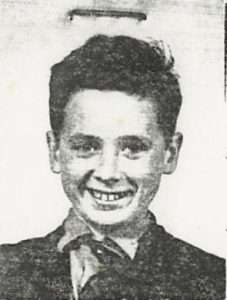
UK: I was born in the United Kingdom in 1948. I spent my very early years in Wales, but for the most part, I was a Londoner. At age 12, I started part-time work on Saturdays and during holidays, delivering groceries on a bicycle. For several years, I worked part-time as a wine/beer bicycle delivery boy, a sales clerk in a book store, a cheese counter shop assistant, a bookkeeper, and a laundry worker.
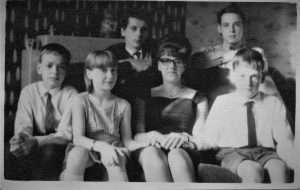
My parents separated when I was about 13. The eldest of five children, I became the “man of the house.” I was not one of those mature teenagers. Instead, I often behaved on the spectrum between mischief and delinquency. I was a poor student but academic enough that in 1966, at age 17, I left Southall Grammar School with GCE “A” Levels in Economics and Geography (both with “D” grades) and six GCE “O” levels (English Language, English Literature, History, Geography, Geology and Economics). With these puny qualifications, I was offered a place at Leicester University to study Economics. I decided not to go since I detested the graphs and the dryness of Economics. It seemed like my life would be just fine without mathematics and science.
As a working 18-year-old, my mother, with four other demanding children, asked me to lodge in a nearby bedsit room and come home for Sunday dinners (lunches). I got a job producing sales statistics for Chesebrough-Ponds, which was odd considering I did not understand statistics. However, I have been a dedicated daily Ponds Dry Skin Cream user for nearly 60 years. I then worked as a trainee Systems Analyst at Cerebos Foods in Willesden, London. It was mysterious work since I had to learn basic computer skills. This was in the days when computers were room-sized majesties fed spools of punched paper tape by druids in white lab coats. The job also introduced me to time-and-motion studies. I was good at measuring quality stopwatch data for segments of work tasks, known innocently as “elements.” Since I honestly and charmingly won the trust of unfriendly, suspicious truck drivers and elderly bookkeeping ladies, I was later much distressed when those same elemental data were used to justify staff reductions, some of the reduced folk being staff I had observed with a stopwatch and yet had become close to.
I had other part-time work while working my day jobs. One was as an occasional Special Effects Assistant at the BBC on the game show “Crossword On Two.” I much enjoyed working at the BBC White City Studios. There was the occasional glamor: I met stars like Marty Feldman, Tony Bennett, and Lulu, a then-famous pop singer. I watched theatrical TV productions and proudly took friends to “Top of the Pops,” a popular weekly dance/pop music show. The money came in handy for my mother and me.

My mother killed herself in March 1967. I had arranged a job transfer with Cerebos to Vancouver, British Columbia. I had just that week been granted a Canadian visa and a voucher for a berth on a ship to Canada – in the days when Australia and Canada were luring immigrants; my mother had been so distraught that I would soon leave. With Mum dead, I put emigration plans aside and stayed in the UK for almost two years while I kept an eye on my four younger siblings, who were stowed in foster homes.
In late 1968, I was much frightened by a pushy man from the Inland Revenue (like the US Internal Revenue Service) who told me that I owed the government taxes for my BBC work and that if I did not pay, I was going to get into big trouble if I left for Canada – he would pursue me! So, to pay off the tax bill and save money, I left Cerebos to work as a warehouseman operating pallet forklift trucks at British American Tobacco near Harrow, Middlesex. It was afternoon and evening work, which left me time in the mornings to explore cheap ways to get to Canada. A Commissionaire (unformed doorman) at the Cunard Line Head Office in London told me I could probably find work as a “workaway” on a Scandinavian ship. Many people told me it would be impossible to work my passage, so I became even more determined to find a ship. Also, my father told me, “You will never amount to anything. You should stay in London and marry your girlfriend”. Those few words fueled my obstinate, painfully insistent ambition for decades. (My girlfriend married my best friend, which worked out fine because they are still married, and I am still close to them both).

Canada: In February 1969, I emigrated to Halifax, Canada, working my passage from the London Docks for about two weeks as a pantry boy/dishwasher/cabin steward to the Officers’ Mess on the Norwegian cargo ship M/S. Lundefjell. From Halifax, I made my way to Toronto. Virtually broke, I applied for a job as a miner at the International Nickel mines in Sudbury, Ontario. I was turned down at the medical exam because I had a severe hearing loss – which was the first time I had been told of my disability. Interested in the idea of mining (even though I knew nothing about it except for a smattering of geology words), I stumbled upon the Annual Prospectors and Developers Convention in Toronto, where I accosted and bullshitted whoever I could for a job in mining. The only people who tried to quell my boisterous enthusiasm seemed to be embarrassed fellow Brits.

At the Convention, I received many invitations to talk to people afterward. I was fortunate to be hired by Siegel Associates (shortly to become Scintrex) to help one of their mineral exploration geophysical crews. I knew nothing about geophysics or mineral exploration. Still, the Siegel geophysicists included many hard-working immigrants, and their culture was to take a chance on promising hires regardless of their accents, qualifications, or class. That Canadian trait endeared me to my new country. Seigel Associates paid me about $400 per month, and I was given a Woods 5-Star sleeping bag designed to keep me comfortable at minus 30 degrees. I was impressed with the salary and benefits – I was, after all, a poor immigrant! Seigel folk taught me what I had to know, and I learned quickly.

I had been told many times in my teens that I was “good with people,” so I imagined public relations would be my best career. I went to school during the winter of 1969-1979, studying Public Relations at Humber College in Etobicoke, Ontario. It was the only PR program in Canada at the time. I did well in the courses- except for the typing, and crafting words into persuasive copy seemed straightforward, if unadventurous. I found a room near the school by picking a nice neighborhood and knocking on doors until a retired couple, Mr. and Mrs. Irvine Brown, took me in as a full board lodger.

In the summer of 1970, I hitchhiked to Northern Ontario looking for work and was hired by Maurice Hibbard of Ingemar Explorations. I cut survey lines through the bush and staking mining claims near Timmins, Ontario. I was a poor axeman and not very skilled at bushcraft. After a few weeks, Scintrex tracked me down and paid Maurice a “finder’s fee” to release me to work for Scintrex in the High Arctic and Labrador, working with one of their airborne geophysics systems installed in a noisy de Havilland Otter.
For several weeks, we were based at Repulse Bay, an Inuit village located almost on the Arctic Circle on the Melville Peninsula. We then moved to a remote site where we had to wait for the ice to break up and for the caribou to stop migrating through camp. In Labrador, we stayed at a strict Mennonite community in the hamlet of Postville. The folks were poor, so we donated most of our fancy food, flown in by helicopter from Northwest River to local families. Friday evenings, the carpet came up at the home of the family I stayed with, the clogs were donned, and people danced traditional Labrador/Newfoundland dances to music from a windup record player. I recall one young woman not allowed to attend: she was shunned for trivial offenses like trying to be pretty.

In the late fall, I returned to Toronto via a long coastal steamer trip from Postville and many flights. I resumed Public Relations at Humber College. For fun, I hosted a lunchtime FM radio show, Medley’s Magnificently Melodious Musical Medley, and was also the Assistant Station Manager at CHBR, Canada’s first college FM radio station. I quit school in about January 1971, disenchanted with the commercial aspects of Public Relations. I wanted more adventure, more rugged work. During the next 2-3 years, I prospected in the remotest areas of Canada with Scintrex, McIntyre Porcupine, TexasGulf Minerals, Kaiser Resources, Union Miniere, Geosearch Consultants, and other mineral exploration firms. I was variously a geophysical operator (EM, Turam, IP, VLF, magnetometer), blaster, line-cutter, geochemical soil, and stream sampler, and prospector wandering the bush, muskeg swamps, and alpine ridge tops banging rocks. I was a full-time inhabitant of tents- in rain, sun, snow.
I became an all-round prospector, proficient with a geological hammer; even if I did not know what type of rock I was whacking or how it got to be that way, I could recognize the sparkling mineralization of copper, lead, and zinc. I thrived on the adventure, silence, and remoteness of wilderness Canada and developed an abiding fondness for bears and helicopters. Those years were my career’s most physically arduous, hazardous, and romantic. Every geologist should prospect for a while!
Between January and June 1973, I traveled in North Africa, Europe, and the UK with my girlfriend, Barbara. She was a spunky, funny, and lovely young woman who tolerated my odd, sometimes impetuous, ways during our travels and still encouraged me in my confused ambitions.
In 1973, I spent the summer in the Stikine Range of British Columbia as a blaster and geological assistant. Just turned 25, I was encouraged by my boss, Arne Birkeland, PEng, to earn a geology degree to advance my career in mineral exploration. With Arne’s support, I applied to Albert “Moose” Manifold, head of the Mining Technology program at the British Columbia Institute of Technology in Burnaby, BC. He accepted me as a “mature student” on the understanding that I had to master the necessary math and science – a daunting challenge because I had no math beyond 4th Form UK (age 14) and virtually no physics or chemistry at all.
 I married Barbara the weekend I started school.
1973: married to Barbara
I had a frightening first few weeks at BCIT, desperately trying to understand math, physics, and chemistry. However, after a challenging first year of the two-year program, I finished at the top of my class. I then transferred to the four-year Geological Engineering Program at the University of British Columbia. Those four years were frequently depressing, and always challenging for me. I had to learn math, physics and science fast.
My 4th year honors thesis research focused on the effects of river training structures on the development of dendritic drainage patterns on the enormous Fraser River Delta. That research was supported by two previous summers mapping the Fraser River sediment distributions and Kitimat River deltas with Dr. John Luternauer and Dr. John Clague of the Geological Survey of Canada. Along with a crammed course load in geology and engineering, I also studied Spanish for two years and specialized in oceanography, hydraulics, fluvial geomorphology, and coastal engineering. I was convinced I would become a coastal engineer working in South America. (Hah! Some dreams do not turn out!).
I graduated from UBC in 1978 with a B. Applied Sc. degree in Geological Engineering (Geotechnical Engineering Option). I was the first geological engineering student awarded the Aro A. Aho Medal for academic excellence. The five years of the BCIT/UBC passage were arduous: from zero math/science understanding to performing well in math-rich grad-level courses in fluvial hydraulics and ocean engineering. Does that read like I am proud? Damn right, I am proud! Earning my first degree was the most challenging project of my career. But I could not have done it without Barbara. We rewarded ourselves with several weeks of wandering in Greece and the UK. By the time we got back to Vancouver, jobs opportunities had evaporated.
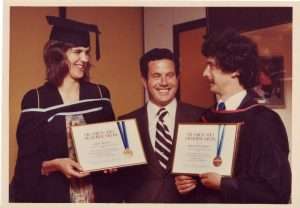
In the fall of 1978, I started work with Dames & Moore, a then well-known geotechnical engineering consultancy in Vancouver, but which is long gone now. But instead of enjoying geotechnical engineering work in Vancouver, I had to work away from home at the Syncrude oil sands project in northern Alberta and various mine tailings dam projects in Canada and Idaho. Working on these remote projects seemed no different than being in the bush as a prospector – I was still far from home and Barbara.
Hawaii: To take a break from my constant working away from home, Barbara and I moved to Hawaii in October 1979 for a short transfer with Dames & Moore in Honolulu. Within a couple of days of arriving in Honolulu, I took a half-day assignment to Maui – and we stayed there for over three years, starting an office and growing a small Maui geotechnical practice. I grew to love Maui, and when the Vancouver office asked for me back, I refused to leave, and joined the Honolulu office, and applied for US Residency.

In 1982, I became the field project manager for a geological engineering project at the Ok Tedi gold mine in the remote Star Mountains of Papua New Guinea. That project was world-class and a professional zenith for me. I managed about 70 people, 25 young engineers, and geologists from the UK, Australia, and New Zealand. The project was extraordinary in terms of technical scope, challenges, and frequent strife with the client.
In early 1983, my OK Tedi project work finished; I returned to Hawaii as an alcoholic, smoking 50 cigarettes a day, emotionally drained, and facing a marriage crisis that was not resolved by separation from Barbara. There was not enough work to keep me busy at Dames & Moore’s Honolulu office, so the Managing Principal told me I would have to work at a local structural engineering office. I told him that he might as well fire me. So he did. I was furious and hurt – after all, I had been the field manager of Dames and Moore’s largest worldwide project in 1982.! I learned another lesson: do not fall in love with your achievements, and certainly do not fall in love with your employer!
With almost no effort, I was immediately hired by PSC Associates, a California geotechnical engineering firm, for their new Honolulu office. But burned out, I spent the next two unhappy years working at half-pace on bread-and-butter geotechnical engineering projects with Damon Runyan, my once-boss at Dames & Moore, who had also been fired after decades working with the firm. Damon was an excellent Geological Engineer and was my most beloved mentor.

Hither and Thither: By early 1985, I was the star of my own magnificent midlife drama, with attendant divorce, job/life dissatisfaction, and wanderlust. I quit my job, girlfriend, ennui, and troubles and began an almost 2-year trip worldwide. I traveled by plane, bus, and train (with bicycle and foot excursions) through Japan, Taiwan, Hong Kong, Thailand, Malaysia, India, Scandinavia, Poland, the United Kingdom, most European countries, Canada, and the US. Whenever I needed money, I took short engineering contracts, one of which took me to Iran and Kuwait during the Iran/Iraq war.
It was a life-changing Odyssey, with adventures and love affairs preventing me from returning home to Hawaii. I still get immense pleasure from reading my 1000 pages of diary entries scribbled in cramped pencil between 1985 and 1990, sprinkled with souvenir bus tickets, sample Toilet Papers of the World, silly postcards, postage stamps, and so on.

Hawaii again: I returned to Honolulu in January 1987 to resume a more humdrum life. I became somewhat settled with a kind, sweet girlfriend who tried hard to convert me into a Christian. I continued geotechnical engineering as an independent contractor. I earned my Hawaii Professional Engineer license in Civil Engineering in 1988, which joined my 1980 Professional Registration as a Geological Engineer in British Columbia. I supplemented my income by tutoring and teaching math, English, and science to middle, high, and adult students. I volunteered at the Honolulu Library of the Blind by recording math and science textbooks for students. I also was a hospice volunteer for several men dying of AIDS and cancer. My last hospice patient was a gay prisoner dying of AIDS at the Federal Penitentiary at Halawa Valley. He was a born-again Christian committed to trying to convert me. Working with him and trying to ignore his homophobic, angry cell mates was emotionally exhausting. I burned out. Plus, my landlady evicted me; my cockatiel Kaiulani flew out of my open door; my girlfriend and I hit a rough patch when I refused to accept Christ. It was time to leave Hawaii for a break.

San Francisco: In the spring of 1989, I accepted a short assignment with PSC Associates in South San Francisco, California, to field manage the Terrabay project on San Bruno Mountain. This huge earth-moving and infrastructure project was the most extensive residential development in the San Francisco area in 1989. The project was fraught with environmental, geotechnical, and geological challenges.

I quickly became frustrated and humbled by a chaotic, heterogeneous geological material I had never before encountered: Franciscan Complex melange (“mélange” is French for “mixture”). Melange, Terrabay, and a new girlfriend, Julie, combined to persuade me to extend the short assignment and move to California. The project was made much more complex than a typical earthwork project in Hawaii because of the higher technical standards of California geotechnical engineering. I felt vulnerable and ignorant about my once-adequate geotechnical engineering knowledge. It was not helpful that several people I often argued with had PhDs in geotechnical engineering from the nearby University of California at Berkeley. I needed to be able to compete with these people, but I felt technically flaccid.
In 1990, at age 42, I started an MS degree in Geotechnical Engineering at UC Berkeley. I married Julie in 1991 – another achievement! However, I was still not confident about my geotechnical abilities, so I continued my studies toward a 1994 Ph.D. in Geotechnical Engineering, supervised by Professor Richard Goodman. Working with Eric Lindquist, I researched the fundamental geotechnical and geological engineering aspects of melanges and other bimrocks. This was pioneering work – meaningful and still rewarding to me. Bimrocks and bimsoils are now of much research interest, judging from the many folks who ask for copies of papers and advice.

UK: 46 years old, Julie and I decided to adventure for a while. So, after graduation, I accepted a post-graduate Academic Visitor position at the Royal School of Mines, Imperial College, University of London. Working with Dr. Michael de Freitas, I continued research on bimrocks and did some teaching at Imperial and Cambridge University. Lecturing at Imperial and Cambridge was ironic – if I had stayed in the UK instead of going to Canada in 1969, I would almost certainly not have progressed in my career to the point that I would have been invited to lecture to graduate engineering and geology students.

San Francisco again: Julie and I returned to California in 1995. Between 1995 and 2005, I worked in the Menlo Park head office of Failure Analysis Associates (now Exponent, Inc.), a world-famous engineering and science consultancy specializing in failure investigations. My most memorable failure investigation at Exponent was the 1995 Sea Cliff Incident in San Francisco, in which a mysterious “sinkhole” swallowed one prestigious home and damaged several others. The story has been televised several times (paper here). I often traveled to the Lihir Gold Mine in Papua New Guinea, the Golden Cross Mine landslide in New Zealand, Ankara, Taipei, and Bangkok to teach Short Courses on bimrocks. I recruited about 30 people for Exponent and helped to grow the geotechnical/geology practice. 2005 I left Exponent as a Principal Engineer, looking for another adventure.

Between June 2005 and June 2009, I was a Senior Consultant in the Oakland, California office of Geosyntec Consultants, a multi-disciplinary geoengineering firm. I started a tiny Geological Engineering practice but was limited to working primarily on bland landfill projects, though I performed investigations of rock slope stability in bimrocks. In 2006, I worked on one of the most exciting projects in my career as a court-appointed expert for the US District Court in Honolulu. The world-famous Forbes Collection of Hawaiian cultural artifacts had been borrowed from the Bishop Museum in Honolulu and then buried and sealed in lave tube burial caves. I advised the Court on lava tube cave stability and, with the help of now Dr. Cohen-Waeber, a fellow Geological Engineer, retrieved the Forbes Collection.
Between October 2008 and October 2009, I was the Richard H. Jahns Distinguished Lecturer in Engineering Geology. I presented 85 Lectures at Universities, professional groups, and consultancies across North America. The Jahns Jaunts during this rewarding Jahns “Jahr” were sometimes exhausting but always memorable experiences. Despite the glories of the Forbes Cave project and Jahn’s Lectureship, Geosyntec fired me in 2009 for not making enough money. To our mutual benefit, I stayed in the Geosyntec office for another 18 months as a Consultant, making more money than before or since.
 2010, I became an Independent Consulting Geological Engineer, often working with Terraphase Engineering in Oakland, California. I am still a Principal Consultant with Terraphase.

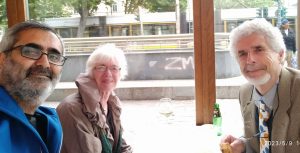
I am proud to be a Geological Engineer. Because of my vagabond career, I have experience in many “geo” fields. Since about 1961, I have worked many jobs (and been fired from several). You can read about my work (and firings) on my Geopractitioner website. I write the occasional article, review technical papers on bimrocks and bimsoils, and present infrequent lectures on ground failures, bimrocks, and the characterization of geological chaos. My published research, some presentations, and Short Courses are freely available to interested researchers and practitioners on my bimrocks website.
In my mid-70s now, I am probably finished with my winder-wander career. I am fortunate to have enjoyed an Odyssey – but it would not have been possible without all the people who have supported, nurtured, and challenged me over the last 60 years – in particular, Julie, who may not follow a map or read a Welsh signpost, but always knows precisely where I need to go…